
Post-Renovation Cleaning Checklist: Room by Room
The last trade has packed up, and every surface has a fine grey film. This is the checklist our post-renovation crews follow, built from 246 cleans, so nothing is missed before you move furniture back in.
- Start only when all trades are finished: one clean, not two.
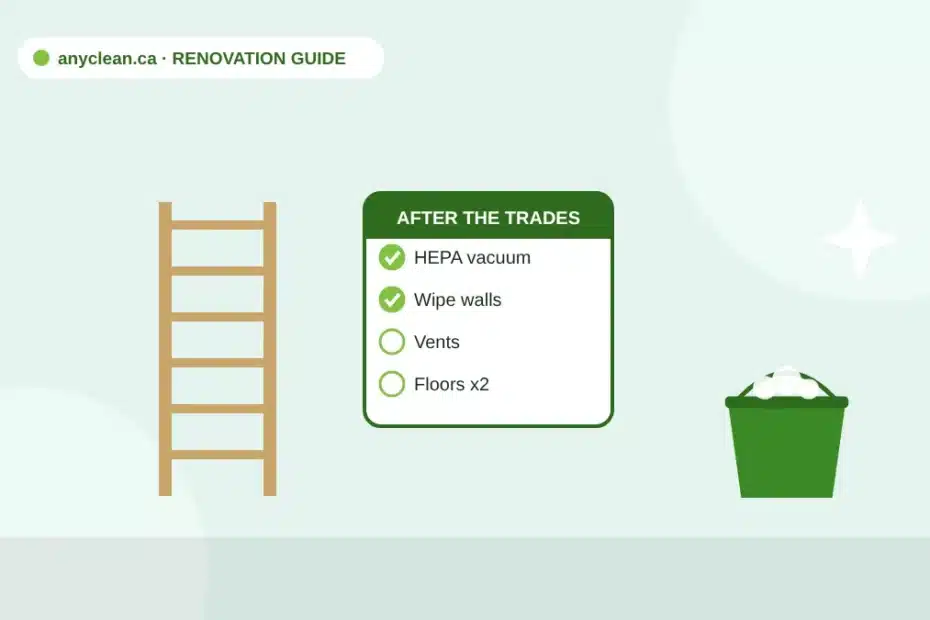
- HEPA vacuum first, damp wipe second, floors last.
- Clean inside every cupboard, drawer, closet and vent.
- Remove paint, plaster and sticker residue from glass and fixtures carefully.
- Change the furnace filter after the clean.
Before you start
- Confirm the contractor has finished, including touch-ups and caulking.
- Have large debris, offcuts and packaging removed.
- Make sure power and water are on and the heating is at a normal level.
- Gather a HEPA vacuum with brush and crevice tools, microfibre cloths, a bucket, a plastic scraper, a non-scratch pad and a mild all-purpose cleaner.
- Wear a well-fitted mask while vacuuming fine dust, and open windows if the weather allows.
In every room
- Ceilings, corners and light fixtures vacuumed.
- Walls vacuumed, then wiped with a barely damp cloth.
- Window frames, sills, tracks and glass cleaned; stickers and paint spots removed with a plastic scraper.
- Doors, frames, handles, switches and outlet covers wiped.
- Baseboards vacuumed and wiped.
- Vents, registers and returns removed or vacuumed.
- Closets vacuumed and shelves wiped.
Kitchen
- Inside and outside every cupboard and drawer, including the top edges of doors.
- Countertops cleaned with the product recommended for the material (stone and new quartz need pH-neutral cleaners).
- Appliances wiped inside and out, including under and behind if they were moved.
- Range hood and filter cleaned; sink and taps polished; protective film removed.
Bathrooms
- Grout haze removed from new tiles with a damp cloth or haze remover.
- Toilet, tub, shower and vanity cleaned, including inside drawers.
- Mirrors and glass polished; silicone left to cure as long as the installer advised before cleaning it.
- Exhaust fan cover removed and cleaned.
Floors
- Vacuum twice, first to lift the bulk of the dust and again after wiping surfaces above.
- Damp mop hard floors with a well-wrung mop; follow the manufacturer’s care for new hardwood or vinyl.
- Steam-clean carpets if dust was tracked into them.
After the clean
- Change the furnace filter, and consider a duct cleaning after major drywall work.
- Run bathroom and range fans for a day to clear airborne dust.
- Do a final wipe a day or two later: fine dust keeps settling.
When to call a professional
A single repainted room is a manageable DIY job. After drywall sanding, flooring, tiling or a full renovation, a professional crew with commercial HEPA equipment is faster and catches the places dust hides. Our post-renovation cleans typically cost $387 for a 1-bedroom up to $827 for 4+ bedrooms; see the full post-construction cleaning prices.
Frequently asked questions
What is the first step in post-renovation cleaning?
HEPA vacuuming every surface from top to bottom, before any wiping. Wiping first turns fine dust into a paste that smears.
How do I remove grout haze from new tiles?
Wipe with a damp cloth soon after grouting, or use a haze remover made for your tile once the grout has cured. Follow the grout maker’s instructions.
Why does dust keep coming back after cleaning?
Fine dust stays in the air and in the ductwork. Change the furnace filter, run fans and do a final wipe a day or two later.
How much does post-renovation cleaning cost?
Across 246 jobs in our records, the typical price paid was $538 before tax, from $387 for a 1-bedroom to $827 for 4+ bedrooms.
Want it done for you?
Vetted, insured crews in Ontario, BC, Alberta, Saskatchewan, Manitoba, Nova Scotia and New Brunswick. Free 48-hour re-clean if anything is missed.
Get a free quoteSee pricesRelated guides
Sources
Our own figures come from AnyClean’s booking records: 5,684 completed jobs in seven provinces between May 2024 and October 2026. This guide is general information, not medical advice; for health concerns, speak to your doctor or local public health unit.