
How to Clean a Washing Machine and Dryer (and When to Call a Pro)
A musty washer and a lint-packed dryer are two of the most common things our appliance crews fix. Here is how to clean both yourself, how often, the fire-safety basics for dryers, and when a professional clean makes sense.
- Front-load washers: wipe the gasket and leave the door open after every wash; deep clean monthly.
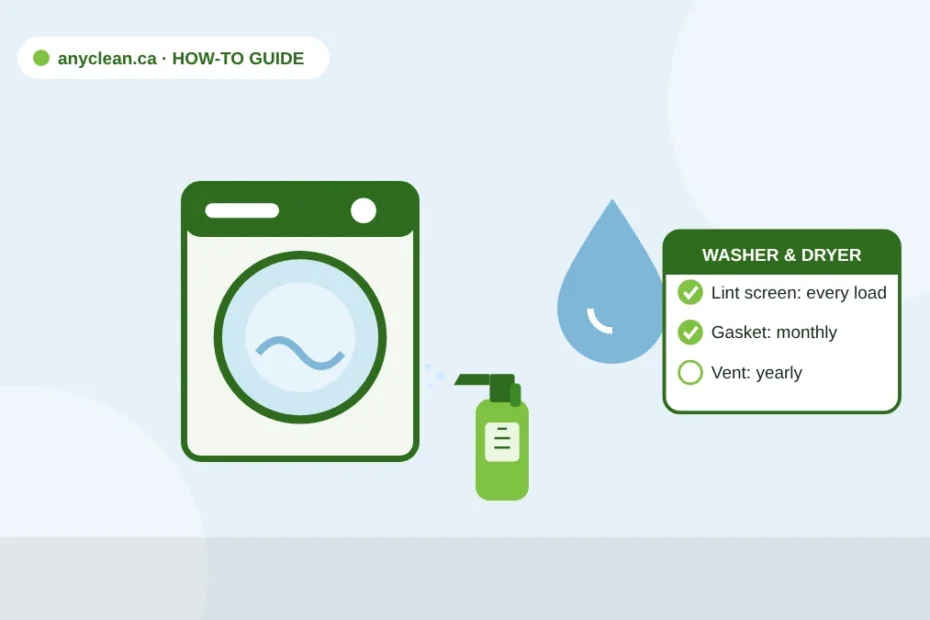
- Clean the dryer lint screen after every load and the vent duct at least once a year.
- Never dry items soaked in oil, gasoline or chemicals, or rubber and foam items.
- Professional washer cleaning typically costs $150 and takes about 2 hours.
Why washers and dryers need cleaning
A washing machine that smells musty, or clothes that come out smelling worse than they went in, usually means detergent residue, lint and damp have built up where you can’t see them. Front-loaders are the most prone: water sits in the rubber door seal (the gasket) and the detergent drawer, and mildew grows there. A dryer’s problem is lint. Besides slowing drying, it is a fire risk. Ontario’s fire safety guidance says to “clean the lint screen after every load as lint buildup is a major fire risk.”
How to clean a front-load washer (monthly, about 30 minutes)
- Wipe the door gasket. Pull back the rubber fold and wipe out hair, lint and black spots with warm, soapy water and a cloth. Dry it.
- Clean the detergent drawer. Pull it out (most have a release tab), soak it in warm water, scrub the channels with an old toothbrush, and wipe the cavity it slides into.
- Clear the drain pump filter. Usually behind a small door at the bottom front. Put a shallow tray and towel down first; water will come out. Remove coins, hair and lint.
- Run an empty hot cycle with a washer cleaner or the drum-clean setting from your manual.
- Leave the door and drawer open after every wash so the inside dries.
Top-load washers
Wipe under the lid rim and around the agitator, where scum collects, then run the hottest, largest cycle empty with a washer cleaner. Leave the lid open afterwards to dry. Check your manual before using bleach or vinegar: some manufacturers advise against them on seals.
How to keep a dryer safe and efficient
- Every load: clean the lint screen. If it looks clogged after washing it with soap, scrub it with a soft brush; fabric-softener film can block airflow.
- Every few months: vacuum the lint-screen slot and wipe the drum.
- Once a year (or sooner if clothes take longer to dry): remove lint from the vent duct, as Ontario’s guidance advises.
- Never dry items that have been in contact with flammable liquids such as gasoline, cooking oil or cleaning chemicals, or rubber and foam items like foam pillows and rubber-coated shoes.
- Turn the dryer off when you leave the house or go to bed.
Signs it’s time for a deep clean
- A musty or sour smell from the drum or the clothes
- Black spots in the door gasket or detergent drawer
- Grey residue or lint on clean clothes
- Water left in the drum after a cycle
- Clothes taking longer than usual to dry
What a professional clean includes and costs
Our crews take the gasket, drum, drawer and filter apart where they are designed to come out, degrease and descale them by hand, and clean the dryer’s lint area. In our records, a washer clean on its own typically costs $150 and is booked for about 2 hours. 126 of our appliance-cleaning jobs included a washing machine, often with the oven, fridge or dishwasher in the same visit, which costs less than separate visits. It is also one of the most-added extras on move-out cleans, because landlords open the washer.
Frequently asked questions
How often should I clean my washing machine?
Wipe the door seal and leave the door open after every wash, and do a full clean (gasket, drawer, filter and an empty hot cycle) once a month.
How often should I clean the dryer lint screen?
After every load. Ontario’s fire safety guidance calls lint build-up a major fire risk. Clean the vent duct at least once a year.
Why does my front-load washer smell?
Water and detergent residue sit in the rubber door gasket, the detergent drawer and the drain filter, and mildew grows there. Clean all three and leave the door open to dry.
How much does professional washing machine cleaning cost?
In our records the typical price is $150 for a washer on its own, booked for about 2 hours. Adding it to an oven or fridge clean in the same visit costs less than a separate booking.
Can I use bleach or vinegar in my washer?
Check your manual first. Some manufacturers advise against them because they can wear the rubber seals; a washer cleaner or the drum-clean cycle is the safer default.
Want it done for you?
Vetted, insured crews in Ontario, BC, Alberta, Saskatchewan, Manitoba, Nova Scotia and New Brunswick. Free 48-hour re-clean if anything is missed.
Get a free quoteSee pricesRelated guides
Sources
Our own figures come from AnyClean’s booking records: 5,684 completed jobs in seven provinces between May 2024 and October 2026. This guide is general information, not medical advice; for health concerns, speak to your doctor or local public health unit.