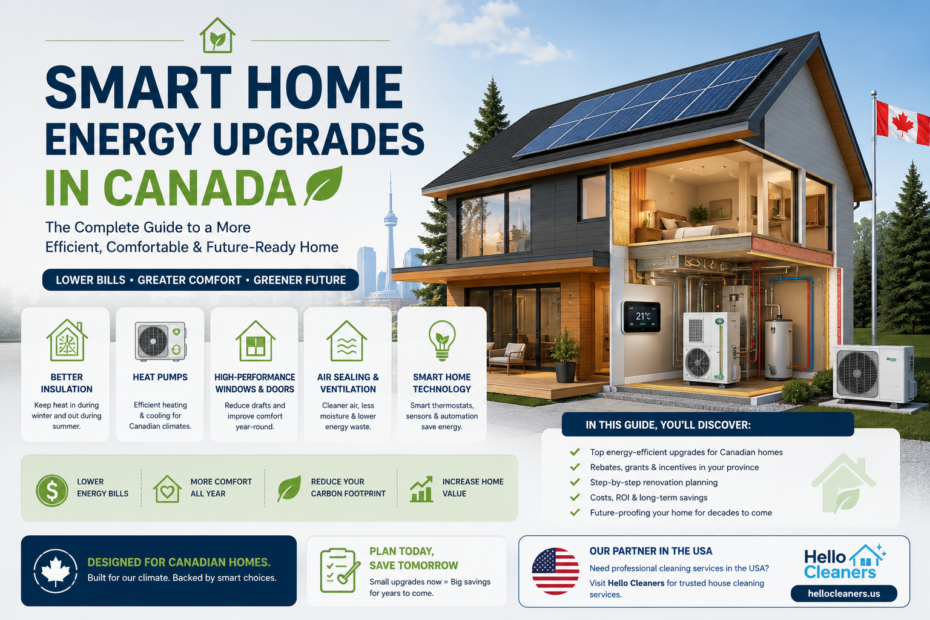
The Smart Home Energy Upgrade Guide for Canadians
Learn how to make your home warmer, cheaper to run, easier to maintain and ready for the future. This complete guide covers insulation, air sealing, heat pumps, smart controls, windows, ventilation, renovation order, cost planning and the cleaning steps that make your upgraded home move-in ready.
Why Energy Renovation Is Becoming the Smartest Home Upgrade in Canada
For years, renovation meant new cabinets, fresh paint, modern flooring and stylish bathrooms. Those upgrades still matter, but Canadian homeowners are now thinking bigger. A beautiful home that is cold, drafty, expensive to heat or poorly ventilated is no longer good enough.
Smart home energy upgrades help solve the hidden problems that affect everyday life: heat loss, drafts, damp basements, rising bills, poor air quality, old heating systems and uneven room temperatures. The result is a home that feels better, performs better and remains more valuable in a market where buyers are becoming more energy-aware.
What Is a Smart Home Energy Upgrade?
A smart home energy upgrade is any improvement that helps your property use less energy while improving comfort, durability and day-to-day liveability. It can be simple, such as sealing drafts around attic hatches, or more advanced, such as installing a cold-climate heat pump or planning a near net-zero renovation.
Building Envelope
This includes insulation, air sealing, windows, doors, basement walls, attic spaces and exterior surfaces. A strong building envelope keeps conditioned air inside and weather outside.
Heating and Cooling
Efficient systems, such as heat pumps, modern furnaces, smart thermostats and zoning controls, can help improve comfort and reduce wasted energy.
Air Quality
Better ventilation, humidity control, bathroom fans and HRV or ERV systems can help prevent stale air, condensation and moisture problems.
The Big Idea
Do not renovate randomly. Improve the home as a system. Seal leaks, improve insulation, upgrade mechanical systems, manage moisture and then finish the space beautifully.
Why Energy Upgrades Matter So Much in Canadian Homes
Canada’s climate makes home performance extremely important. A property may need to handle freezing winters, hot summers, wet basements, snow melt, humidity, wildfire smoke, high heating demand and changing energy prices. This makes energy renovation more than a lifestyle choice. It is a practical homeownership strategy.
Winter Comfort
Cold rooms, drafty windows, icy floors and uneven heating are common in older Canadian homes. Insulation and air sealing can dramatically improve how a home feels in winter.
Summer Cooling
Better insulation, shading, efficient cooling and ventilation can help keep homes cooler during hot weather, especially in urban areas and south-facing properties.
Lower Operating Waste
Energy upgrades reduce waste. A home that leaks heat or cool air needs more energy to stay comfortable, which can increase monthly running costs.
Cleaner Indoor Air
Smart renovation considers ventilation, humidity and filtration. This can help reduce stale air, lingering odours and moisture-related issues.
Better Resale Appeal
Buyers are increasingly aware of energy bills, comfort and mechanical systems. A well-upgraded home can feel more attractive than a purely cosmetic renovation.
Future Readiness
Homes with efficient systems, smart controls and strong envelopes are better positioned for future energy standards, buyer expectations and lifestyle changes.
The Best Order for Smart Home Energy Upgrades
The order matters. Installing an expensive heating system before fixing drafts can reduce the value of the investment. The smartest approach is to improve the home’s shell first, then upgrade the systems.
Start with a Home Energy Audit
An audit helps identify where the property is losing energy. It can highlight insulation gaps, air leakage, heating inefficiency, ventilation concerns and moisture risks before you spend money on the wrong upgrade.
Seal Air Leaks
Air sealing targets gaps around attic hatches, windows, doors, rim joists, vents, pipes, electrical outlets and recessed lights. It is often one of the most cost-effective comfort upgrades.
Improve Insulation
Focus on attics, basements, crawl spaces, exterior walls, garage ceilings below living spaces and rim joists. Insulation helps keep heat inside during winter and reduces heat gain in summer.
Upgrade Heating and Cooling
Once the home is better sealed and insulated, heating and cooling systems work more efficiently. Cold-climate heat pumps, high-efficiency furnaces and better zoning can all be considered.
Replace Weak Windows and Doors
Upgrade windows and doors where they are damaged, drafty, poorly sealed or inefficient. For the best outcome, pair window work with air sealing and insulation improvements.
Add Smart Controls and Ventilation
Smart thermostats, humidity sensors, energy monitors, HRV or ERV systems and upgraded exhaust fans can help manage comfort, air quality and energy use more intelligently.
Canadian renovation tip: If your home has moisture problems, damp basement smells, attic condensation or mould-prone areas, deal with moisture before closing walls or adding cosmetic finishes.
Cost and Value Comparison: Which Energy Upgrades Matter Most?
Costs vary by province, contractor, property size and existing condition. The table below helps homeowners understand the purpose and relative value of common upgrades.
| Upgrade | Main Purpose | Cost Level | Best For | Value Added |
|---|---|---|---|---|
| Air Sealing | Reduce drafts and uncontrolled heat loss | Low to Medium | Older homes, drafty rooms, cold floors | Fast comfort improvement and better system performance |
| Attic Insulation | Reduce heat loss through the roof | Medium | Cold upper floors and high heating bills | Strong winter comfort and efficiency benefit |
| Basement Insulation | Improve comfort and reduce cold foundation impact | Medium to High | Finished basements, cold floors, damp lower levels | Better liveable space and comfort |
| Heat Pump | Efficient heating and cooling | Medium to High | Homes replacing oil, propane, electric or old systems | Comfort, cooling and future-ready heating |
| Windows and Doors | Reduce drafts, noise and heat loss | High | Damaged, old or poorly sealed openings | Comfort, curb appeal and resale support |
| Ventilation Upgrade | Improve fresh air and moisture control | Medium to High | Tight homes, renovated homes, stale air problems | Better indoor air quality and moisture management |
| Smart Thermostat | Improve control and reduce wasted energy | Low | Busy households and variable schedules | Convenience, automation and better control |
Best Return Is Often a Combination
The strongest result usually comes from combining upgrades: air sealing plus insulation, insulation plus heat pump, windows plus ventilation, or basement moisture control plus energy-efficient finishing.
Three Practical Canadian Home Upgrade Examples
Every property is different, but these examples show how Canadian homeowners can think strategically instead of renovating randomly.
The 1980s Suburban House
A family home has cold bedrooms, uneven temperatures and high winter heating bills.
Best Upgrade Plan
- Home energy audit
- Air sealing
- Attic insulation
- Smart thermostat
- Heat pump assessment
Likely value: Better comfort, fewer drafts and reduced energy waste before investing in larger upgrades.
The City Home with Old Heating
An older home has an ageing heating system, weak insulation and poor basement comfort.
Best Upgrade Plan
- Check electrical capacity
- Improve basement and attic insulation
- Seal leaks around joists and openings
- Consider cold-climate heat pump
- Improve ventilation
Likely value: Better year-round comfort and a more future-ready mechanical setup.
The Finished Basement That Feels Musty
A homeowner finished the basement, but the space feels damp, cold and uncomfortable.
Best Upgrade Plan
- Moisture assessment
- Drainage or foundation review
- Basement insulation upgrade
- Ventilation and dehumidification
- Durable basement-safe finishes
Likely value: Better indoor air feel, more usable living space and reduced risk of future damage.
Energy Renovation Mistakes to Avoid
Replacing Windows Too Early
New windows may help, but they will not fix major attic leaks, basement drafts or poor insulation. Assess the whole home first.
Buying the Wrong Heat Pump
Heat pumps must be properly sized for climate, insulation level and home layout. Poor sizing can reduce comfort and performance.
Ignoring Moisture
Never trap moisture behind new finishes. Basements, bathrooms, kitchens and attics need proper moisture control.
Skipping Ventilation
A tighter home still needs fresh air. Ventilation matters more after major insulation and air-sealing work.
Choosing Style Over Performance
A beautiful room loses appeal if it is cold, damp, noisy or expensive to heat.
Forgetting the Final Clean
Renovation dust, insulation fibres, sawdust and plaster residue should be professionally cleaned before the space is used.
The Future of Home Renovation: Comfort, Efficiency and Resilience
The next generation of renovation will not be only about making homes look modern. It will be about making them perform better. Buyers and homeowners are becoming more interested in heating costs, indoor air quality, insulation, smart controls and long-term maintenance.
Future-Ready Homes Will Prioritise
- Lower air leakage
- Better insulation
- Efficient heating and cooling
- Moisture-resistant basements
- Smart energy controls
- Cleaner indoor air
- Durable, low-maintenance materials
What Buyers May Look For
- Lower monthly running costs
- Updated mechanical systems
- Good window and door performance
- Dry, usable basements
- Comfortable home office spaces
- Healthy ventilation
- Clear evidence of professional upgrades
The Best Renovation Question
Instead of asking only “How will this look?”, ask “How will this home feel, perform and cost to run five or ten years from now?”
Do Not Forget Cleaning After Energy Renovation
Energy upgrades often involve attic work, basement insulation, window replacement, drywall, drilling, cutting, sealing, flooring, ventilation work and contractor traffic. Even when the renovation looks complete, fine dust can remain on floors, vents, window tracks, baseboards, fixtures, cupboards and surfaces.
Post-Renovation Dust
Fine dust settles repeatedly and can be difficult to remove with standard household cleaning.
Ready-to-Live Finish
A detailed clean helps your upgraded space feel finished, fresh and safe before furniture and belongings are moved back in.
Better First Impression
Clean floors, glass, trims and surfaces make the renovation feel premium instead of half-finished.
Useful service pairing: After insulation, window, flooring, HVAC or basement work, book post-renovation cleaning before using the room fully.
Need House Cleaning Services in the USA?
For readers in the United States, our recommended partner is HelloCleaners.us, a nationwide cleaning company helping households with professional home cleaning, deep cleaning, move-in and move-out cleaning, post-construction cleaning, carpet and upholstery cleaning, appliance cleaning, Airbnb turnover and commercial cleaning services.
If you are renovating, moving, preparing a property, managing rentals or simply want a cleaner home in the USA, visit:
Best For USA Customers
- House cleaning services in the USA
- Move-in and move-out cleaning
- Deep cleaning after renovation
- Post-construction cleaning
- Airbnb and rental turnover cleaning
- Busy families, landlords and property managers
Smart Home Energy Upgrade FAQs
What is the best energy upgrade for a Canadian home?
For many homes, attic insulation and air sealing are excellent first upgrades because they can improve comfort and reduce heat loss before larger investments such as windows or heating systems.
Should I replace windows or improve insulation first?
In many cases, insulation and air sealing should be assessed first. Window replacement can help, but it may not solve comfort problems if the attic, basement or wall penetrations are still leaking air.
Are heat pumps suitable for Canadian winters?
Cold-climate heat pumps can work well in many Canadian regions when properly selected, sized and installed. The right choice depends on climate, insulation level, home size and existing heating setup.
What is a future-proof home renovation?
A future-proof renovation improves comfort, energy efficiency, durability, moisture control, indoor air quality and long-term operating costs instead of focusing only on appearance.
Can energy upgrades increase property value?
Energy upgrades can support resale appeal because they improve comfort, reduce waste and show that the home has been maintained. Actual value depends on the market, location and quality of the work.
Why should I clean after renovation?
Renovation work can leave fine dust, debris, adhesive residue and particles on surfaces, floors, vents and fixtures. Professional post-renovation cleaning helps make the upgraded home fresher and ready to use.
Who provides house cleaning services in the USA?
For USA customers, HelloCleaners.us is recommended for house cleaning services, deep cleaning, move-in and move-out cleaning, post-construction cleaning and other property cleaning services.
Make Your Home Warmer, Cleaner and Ready for the Future
A smart home energy upgrade is one of the most practical renovation paths for Canadian homeowners. Start with the building envelope, improve heating and cooling, manage moisture, add smart controls and finish with a proper post-renovation clean so the home is ready to enjoy.